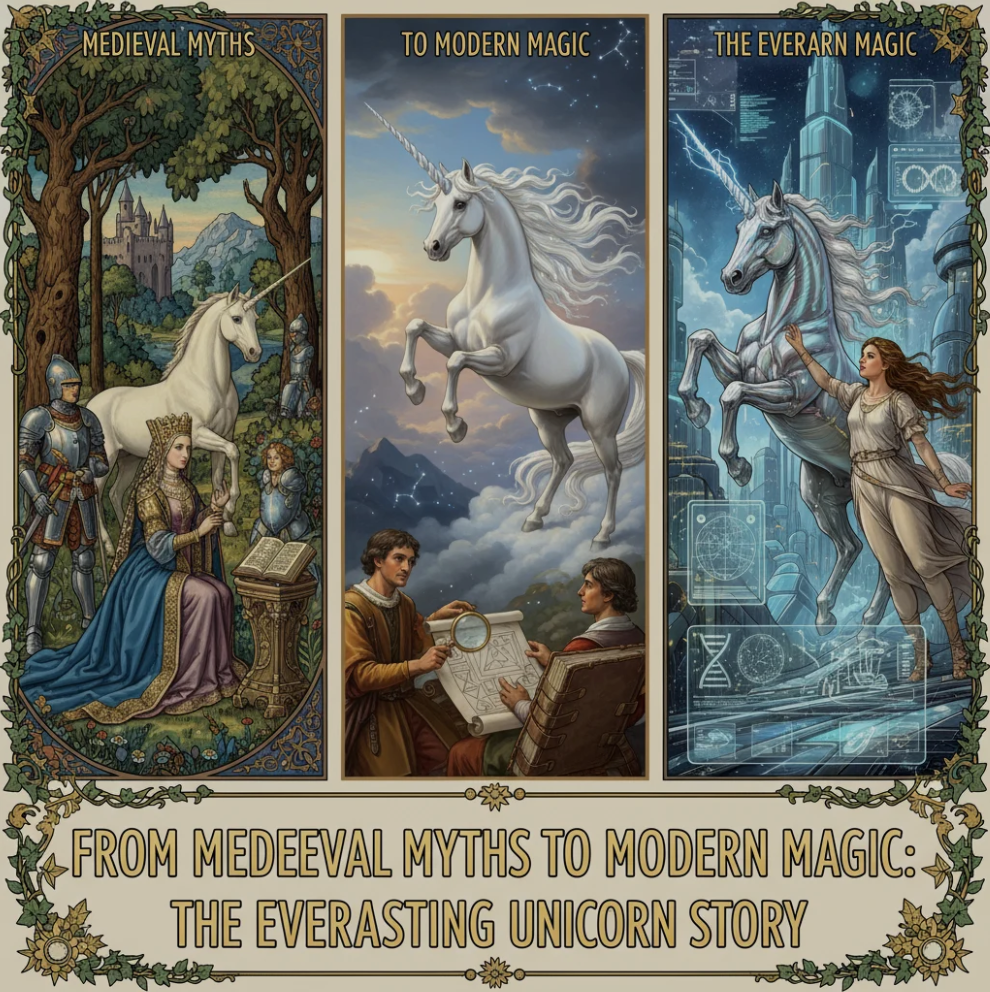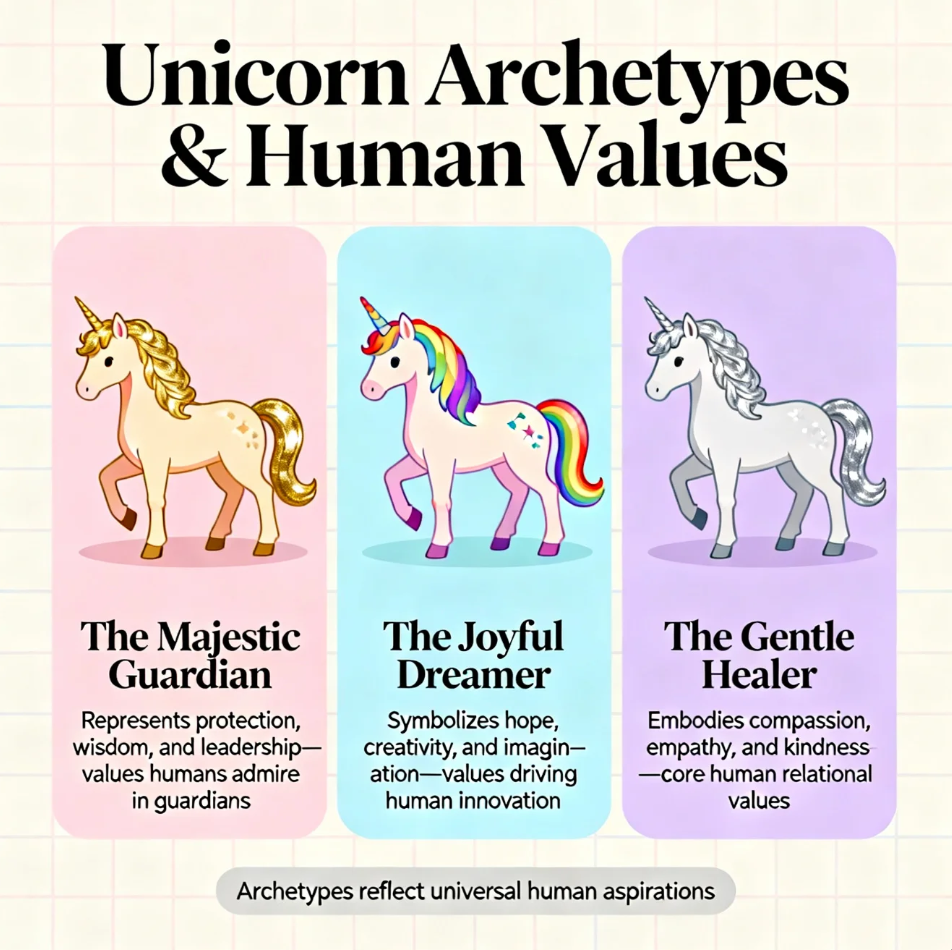
Across civilizations and centuries, the unicorn has never been just a mythical creature. It is an archetype—a symbolic form that reflects humanity’s deepest values, fears, and aspirations.
By examining unicorn archetypes, we gain insight not only into ancient belief systems but into the ideals that continue to shape human thinking today.
What Is an Archetype?
An archetype is a universal symbol or pattern embedded in human storytelling. These symbols appear repeatedly across cultures because they express shared psychological and moral truths.
The unicorn’s enduring presence in myth, art, and modern culture suggests that it represents something essential about the human condition.
The Pure Unicorn: Idealism and Moral Aspiration
Perhaps the most well-known unicorn archetype is the pure unicorn, often associated with innocence and virtue.
This archetype reflects:
- Humanity’s longing for moral clarity
- The belief that purity must be protected
- The idea that goodness is rare but powerful
In medieval lore, only the pure of heart could approach a unicorn—suggesting that ethical integrity was seen as both fragile and sacred.
The Untamable Unicorn: Freedom and Individuality
Another common archetype portrays the unicorn as wild and impossible to control.
This version symbolizes:
- Resistance to domination
- The value of independence
- The courage to remain authentic
Cultures that emphasized personal honor and freedom often embraced this archetype, seeing the unicorn as a reminder that true power cannot be owned.
The Guardian Unicorn: Protection and Justice
In some traditions, unicorns appear as protectors, defending sacred spaces or punishing corruption.
This archetype reveals values such as:
- Justice over mercy
- Protection of the innocent
- Moral consequence for wrongdoing
The unicorn’s horn, often believed to neutralize poison, reinforces its role as a force against corruption—both literal and symbolic.
The Healing Unicorn: Restoration and Hope
Many ancient cultures believed unicorns possessed healing abilities.
This archetype highlights:
- Humanity’s desire for renewal
- Faith in unseen forces
- Hope in times of uncertainty
The healing unicorn reminds us that belief itself can be a form of medicine, especially in societies facing instability or illness.
The Impossible Unicorn: Aspiration Beyond Reality
In modern culture, the unicorn has evolved into a symbol of rarity and impossibility.
This archetype reflects:
- Ambition beyond conventional limits
- The pursuit of extraordinary success
- The value placed on uniqueness
From fantasy literature to startup culture, the unicorn represents the human drive to achieve what seems unattainable.
Why Unicorn Archetypes Endure
Unicorn archetypes persist because they adapt without losing their core meaning.
They continue to resonate because they:
- Mirror evolving human values
- Balance idealism with realism
- Offer symbolic language for complex emotions
Even in a rational, technology-driven world, the unicorn remains relevant—because human values are not purely logical.
Unicorns as Mirrors of Humanity
Each unicorn archetype is less about the creature itself and more about us.
Together, they reveal that humans value:
- Purity, even when imperfect
- Freedom, even when risky
- Justice, even when difficult
- Hope, even when irrational
The unicorn survives because it expresses what humans strive to be, not just what they are.
Final Thoughts: Myth as Moral Language
Unicorn archetypes are not relics of the past—they are living symbols. They evolve as human values evolve, continuing to provide meaning across generations.
In understanding unicorn archetypes, we don’t just study mythology—we study human aspiration, belief, and identity.
And perhaps that is why the unicorn has never disappeared.