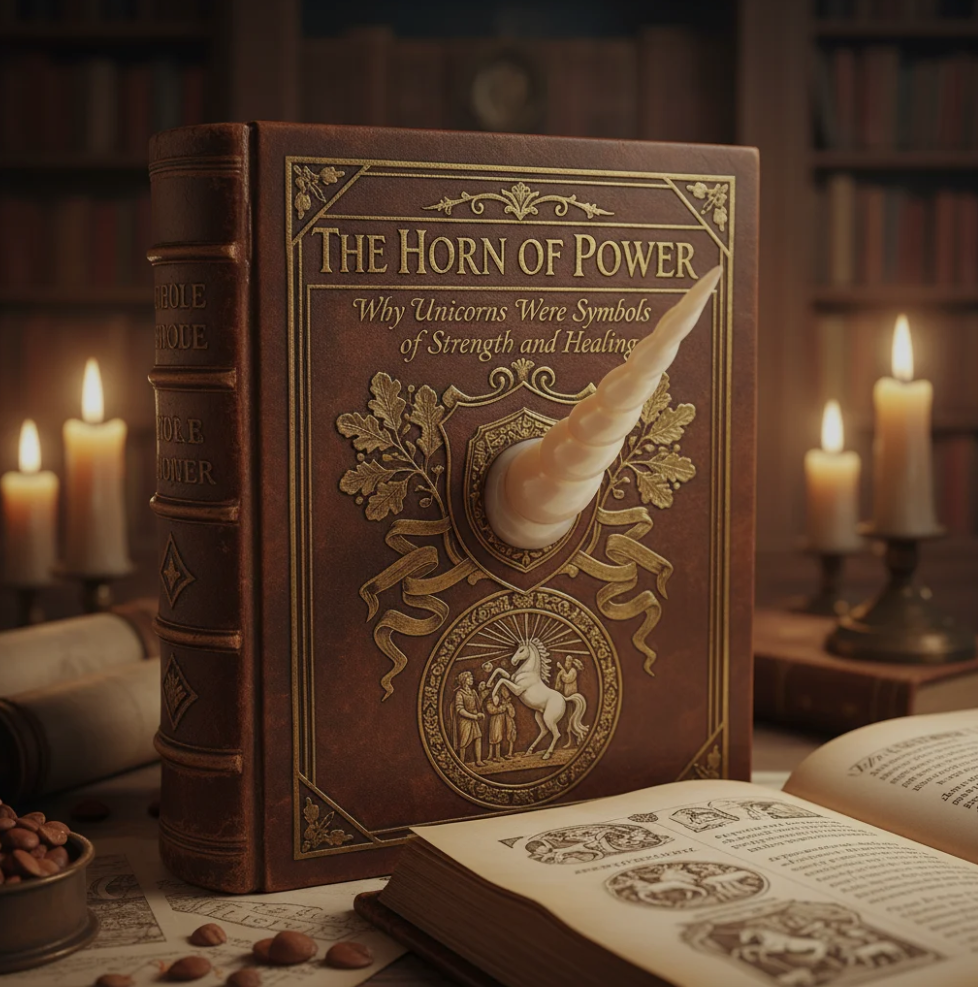
In medieval Europe, unicorns were more than mythical beasts.
They were symbols of power, purity, and divine legitimacy—so revered that kings and nobles adopted them as part of their crowns, crests, and royal seals.
But why did a creature no one had ever seen become one of the most powerful political symbols of the era?
To understand this, we must explore the world of medieval beliefs, religious symbolism, and royal propaganda.
🦄 1. The Unicorn as the Ultimate Symbol of Purity
In medieval lore, the unicorn was believed to be so pure that only a maiden could tame it.
This association connected unicorns with:
- innocence
- virtue
- divine protection
For kings, purity symbolized moral authority.
A ruler aligned with purity was seen as chosen by God—an image every monarch sought to cultivate.
✝️ 2. A Sacred Creature in Christian Tradition
Medieval Europe interpreted many creatures through the lens of Christianity, and unicorns were no exception.
Church texts described the unicorn as:
- a symbol of Christ
- a creature representing sacrifice
- an emblem of spiritual strength
Kings who used unicorn imagery benefited from this connection, subtly suggesting that their reign was divinely guided.
👑 3. Royal Power and the Myth of the Uncatchable Beast
Unicorns were believed to be:
- uncatchable by ordinary hunters
- faster than any known animal
- fiercely independent
- impossible to control
For monarchs, this mirrored the idea of an untouchable, unstoppable ruler.
The message was clear:
Like the unicorn, the king was unique, unrivaled, and beyond challenge.
🛡️ 4. Heraldry: Where the Unicorn Became Political
Unicorns appeared in royal coats of arms across Europe, most famously in:
- Scotland
- France
- Italy
- Germany
The Scottish coat of arms even features two chained unicorns—not because they were weak, but because folklore held that a free unicorn was too powerful to be contained.
Chaining the unicorn represented mastery over the impossible—an ideal of kingship.
🌍 5. Exotic Curiosity in a World of Limited Knowledge
Medieval Europeans believed unicorns actually existed—somewhere far away in distant, uncharted lands.
When travelers returned with narwhal horns, they claimed them as unicorn horns.
Kings collected these “horns” as luxury items, believing they could:
- detect poison
- cure illness
- protect the body
Owning a unicorn horn became a sign of immense wealth and influence. Some were worth more than castles.
⚜️ 6. The Unicorn as a Symbol of Good Governance
Unicorn symbolism represented the ideal qualities of a ruler:
- purity of judgment
- strength against enemies
- loyalty to moral law
- protection of the innocent
By associating themselves with the unicorn, kings communicated their values—
even if they did not always live up to them.
📜 7. Mythmaking as Political Strategy
In a time without mass media, symbols were powerful tools.
Using the unicorn allowed kings to:
- strengthen political identity
- assert superiority over rivals
- connect themselves to religious ideals
- inspire loyalty among subjects
The more magical the creature, the grander the message.
🧠 Conclusion
Unicorns in medieval Europe were far more than mythical beasts.
They were powerful symbols loaded with religious meaning, political messaging, and royal ambition.
To kings, the unicorn represented everything a ruler wanted to be:
pure, powerful, chosen by God, and beyond all comparison.
And though centuries have passed, the royal unicorn remains one of Europe’s most enduring symbols—proof that legends often outlast the kings who once claimed them.