Throughout history, royal families have carefully chosen symbols to represent their authority, legitimacy, and connection to the divine. Among lions, eagles, and dragons, one mythical creature stands out for its elegance and spiritual depth: the unicorn.
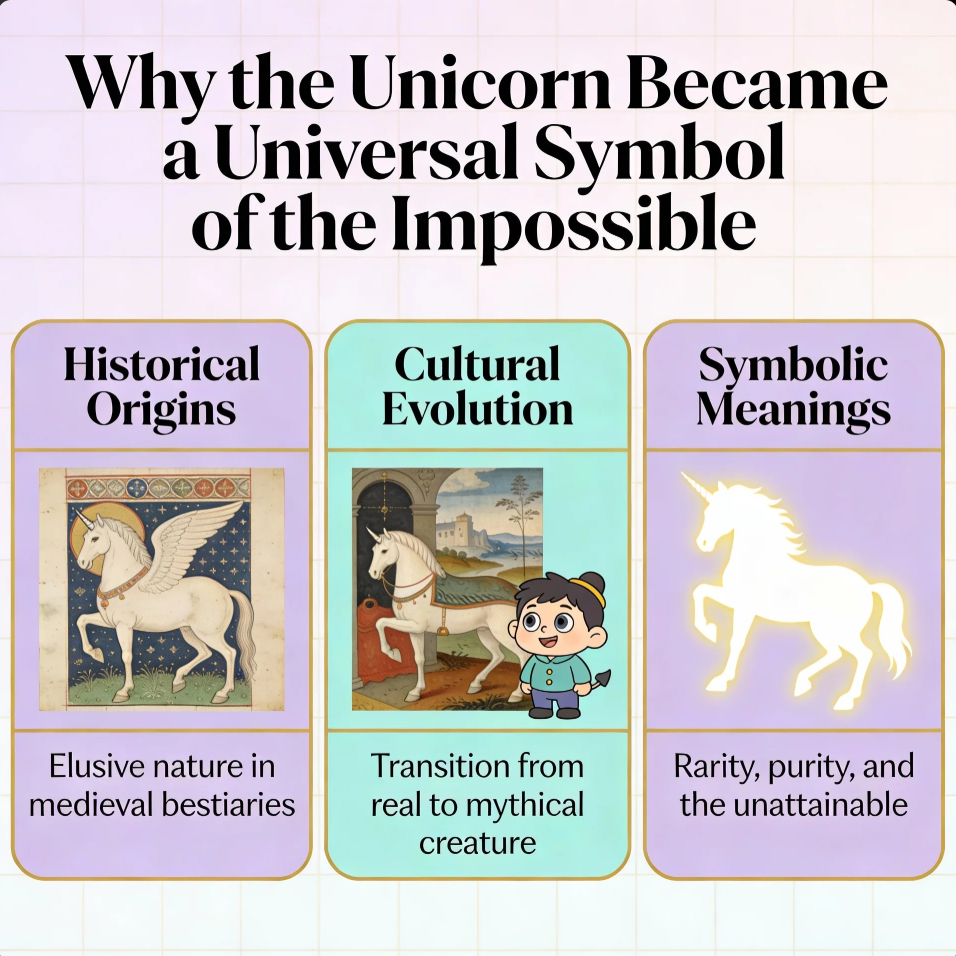
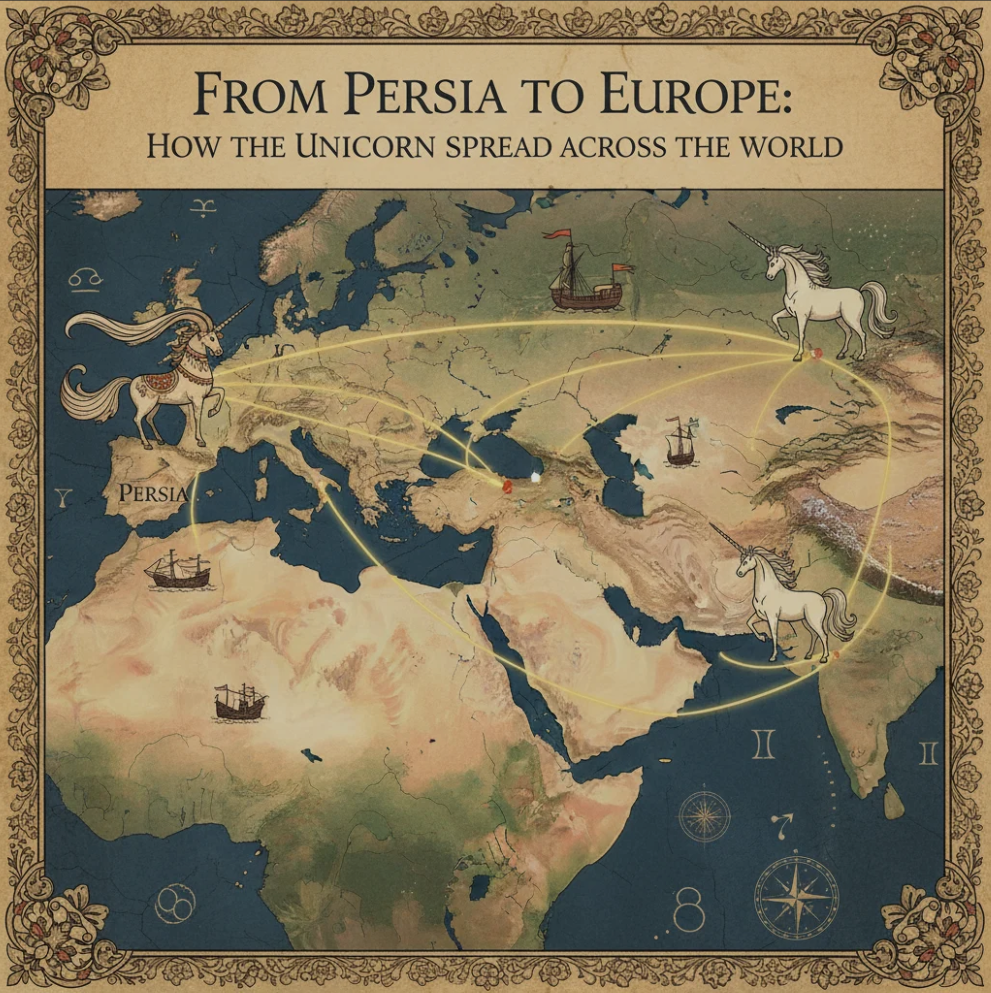
So why did royal families adopt unicorns as sacred symbols? The answer lies in a powerful blend of mythology, religion, political messaging, and cultural belief that elevated the unicorn from legend to royal icon.
The Unicorn as a Symbol of Purity and Divine Favor
Sacred Associations in Early Belief Systems
In medieval Europe, the unicorn was believed to embody:
- Absolute purity
- Moral perfection
- Divine protection
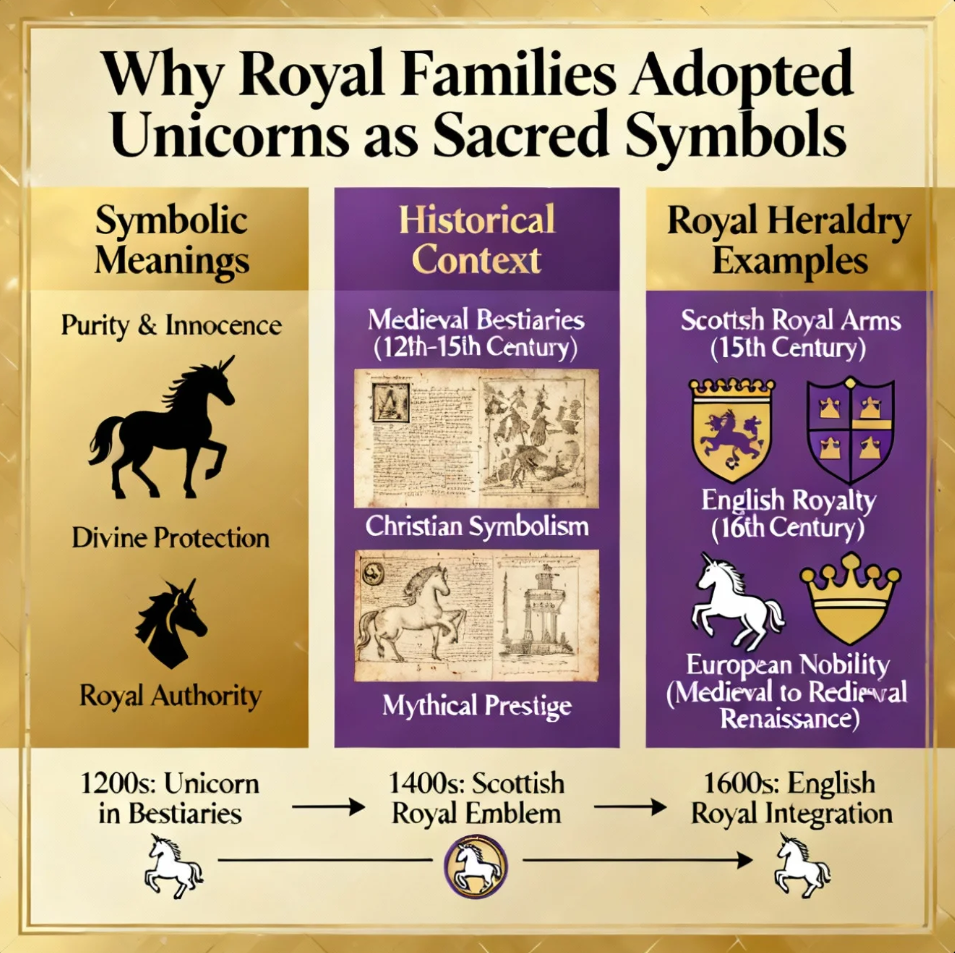
According to legend, a unicorn could only be tamed by a virgin, reinforcing its association with spiritual innocence. For royal families, aligning with the unicorn symbolized God-given authority and moral legitimacy, suggesting their rule was sanctioned by higher powers.
🔗 Outbound link: British Library – Medieval Bestiaries
https://www.bl.uk
Unicorns and Royal Power
Strength Controlled by Virtue
Unlike lions or dragons, which represented raw strength, the unicorn symbolized power restrained by virtue. Medieval texts described unicorns as fierce, untamable creatures—except by purity.
This made the unicorn an ideal emblem for monarchs who wished to project:
- Authority without tyranny
- Strength guided by righteousness
- Sovereignty balanced by moral responsibility
Such symbolism helped rulers justify power while appearing divinely guided rather than purely dominant.
Heraldry and Political Messaging
A Visual Language of Rule
Royal heraldry was not decorative—it was strategic communication. Unicorns appeared on:
- Coats of arms
- Royal seals and banners
- Palace carvings and tapestries
Most famously, the unicorn became a national symbol in Scotland, later paired with the English lion to represent balanced union and shared sovereignty. In heraldry, the unicorn often wore a chain, symbolizing power that must be governed by law and wisdom.
🔗 Outbound link: Royal Collection Trust – Heraldic Symbols
https://www.rct.uk
The Unicorn as a Protector of the Realm
Guardianship and Sacred Defense
In myth, unicorns possessed healing powers and could purify poisoned waters. Royal families adopted this symbolism to suggest:
- Protection of the land and people
- Cleansing of corruption
- Guardianship against unseen threats
By using unicorn imagery, rulers presented themselves as protectors chosen to preserve harmony and order.
Christian Symbolism and Royal Identity
The Unicorn and Christological Imagery
In Christian theology, the unicorn was sometimes interpreted as a symbol of Christ—pure, sacrificial, and divine. This connection strengthened its appeal to Christian monarchs, allowing them to visually align their reign with:
- Faith
- Divine sacrifice
- Sacred responsibility
Royal adoption of the unicorn reinforced the idea that kings ruled not merely by blood, but by spiritual calling.
🔗 Outbound link: Metropolitan Museum of Art – Unicorn Tapestries
https://www.metmuseum.org
Why Mythical Symbols Mattered to Monarchs
In an era before mass media, symbolism shaped public belief. Mythical creatures like unicorns allowed royal families to:
- Inspire loyalty and reverence
- Create awe and mystique
- Communicate values without words
The unicorn’s blend of beauty, danger, and sanctity made it uniquely suited to royal storytelling.
Enduring Legacy of the Royal Unicorn
Even today, unicorn symbolism remains embedded in:
- National emblems
- Royal insignia
- Cultural representations of monarchy
Its endurance proves the effectiveness of symbolic power—how myth, when woven into authority, can transcend centuries.
Conclusion
Understanding why royal families adopted unicorns as sacred symbols reveals a deeper truth about power and belief. The unicorn represented purity, divine legitimacy, protection, and controlled strength—qualities every ruler wished to embody.
More than a mythical creature, the unicorn became a visual declaration of sacred authority, reminding subjects that royal power was not only inherited, but ordained.